
Buying guide
Types of Edible Bird's Nest: How Do Raw, Feather-Removed, Refined and Nest Feet Differ?
By: Đỗ Hoàng Quân, Director of Yến Sào Uyên Nguyên · Published: · Updated:
Quick answer
Edible bird's nest is usually grouped by how much it has been processed: raw nest still has feathers and impurities, feather-removed nest has had its feathers picked out but keeps the nest shape, refined nest has been cleaned and pressed into a mould, and nest feet are the thick base of the nest. Nests are also grouped by where the swiftlets built them (house-farmed or cave) and by colour.
This article helps you tell the types of bird's nest apart when buying. It is not medical or nutritional advice.
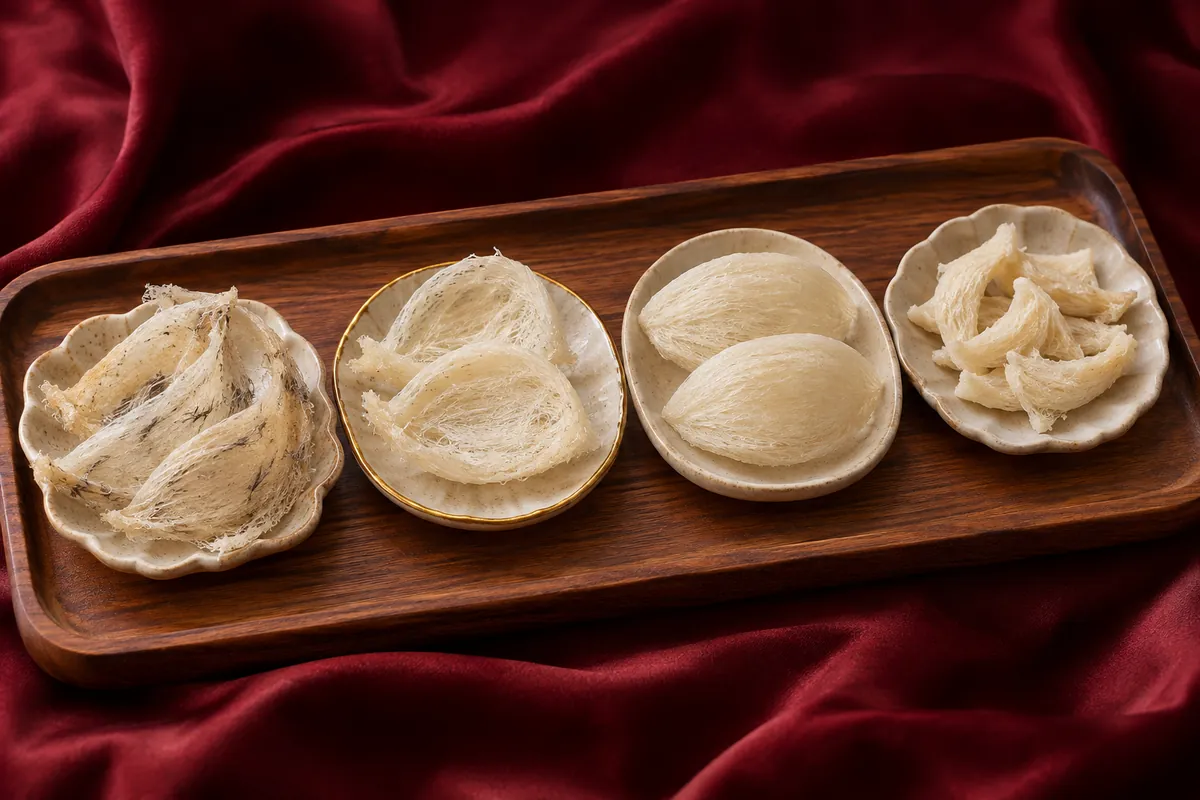
What types of bird's nest are there?
There are three common ways to group them. The first is by processing level: raw nest, feather-removed nest, refined nest and nest feet. The second is by where the swiftlets built the nest: house-farmed nest and cave nest. The third is by colour: white, pink and red ("blood") nest (according to Dien May Xanh (opens in a new tab)).
When shopping, processing level matters most: it decides how much cleaning you do at home and the price of each box. The other two groupings tell you about origin and the risks worth asking the seller about.
How do raw, feather-removed and refined bird's nest differ?
The three differ in how clean they are. Raw nest is barely treated. Feather-removed nest has had its feathers picked out but keeps the nest shape. Refined nest has been cleaned and then pressed back into a shape. Long Chau pharmacy (opens in a new tab) also lists raw nest, whole feather-removed nest and refined nest as the three main kinds of dried bird's nest.
Raw bird's nest
Raw nest is the original nest, not yet processed, still mixed with feathers and impurities (Long Chau (opens in a new tab)). Its advantage is that it keeps the nest's original shape and natural smell, so it is easier to inspect the strands to tell whether it is genuine. In return, you must soak it and pick out the feathers carefully yourself before double-boiling.
Feather-removed bird's nest
Feather-removed nest is nest whose feathers have been picked out by hand while the nest keeps its shape (Dien May Xanh (opens in a new tab)). The dried feather-removed nest from Yến Sào Uyên Nguyên has about 95% of the feathers removed, so after soaking a few fine feathers may remain to be picked out.
Refined (reshaped) bird's nest
Refined nest has been soaked, fully cleaned of feathers and pressed back into a nest shape (Dien May Xanh (opens in a new tab); Long Chau (opens in a new tab)). It is the most convenient, since you only soak it until it swells before double-boiling, but buyers find it harder to check the strands than with raw nest, so it matters even more to choose a clear, trustworthy seller.
What are nest feet and loofah-style nest?
Nest feet are the base that fixes the nest to a rock wall or the wall of a swiftlet house. This part is usually a thick, firm block with few feathers, but its strands are not as long as those of the body of the nest (Long Chau (opens in a new tab)). Also according to Long Chau, nest feet are harder and need to be soaked for at least 1 hour before they soften enough to be pulled into strands.
Loofah-style nest is named after the shape of the finished product: cleaned nest strands woven loosely like a loofah sponge, not pressed into a nest. At Yến Sào Uyên Nguyên, nest feet are the base of the nest where it attached to the swiftlet house wall, and Refined Bird's Nest – Loofah-Style is cleaned nest packed in loofah-style form instead of being shaped into a nest; Nest Feet + Loofah-Style combines nest feet and loofah-style nest.
Quick comparison of nest types by processing level
The table below pairs the general features of each type with the products sold at Yến Sào Uyên Nguyên. Strand ratios and prices are taken from the product pages on 8 November 2026; cells marked "Not disclosed" are details the shop does not publish.
| Type | Feather cleanliness | Strand ratio | Cleaning work at home | Suits | Price per 100g box |
|---|---|---|---|---|---|
| Raw bird's nest | Still has feathers and impurities (low-feather grade) | Not disclosed | A lot: soak and pick out feathers carefully | People who want to process it themselves and inspect the strands | 1,890,000 ₫ |
| Feather-removed nest | About 95% removed, nest shape kept | About 95% | Moderate: pick out remaining fine feathers | People who want a whole-shaped nest with little cleaning work | 4,050,000 ₫ |
| Refined Grade 1 | Cleaned, pressed into nest shape | About 70% | Little: soak, then double-boil | Busy people, gift buyers | 3,420,000 ₫ |
| Refined Grade 2 | Cleaned, pressed into nest shape | About 50% | Little: soak, then double-boil | Regular users who want a moderate cost | 3,150,000 ₫ |
| Refined loofah-style | Cleaned, loofah-style form | Not disclosed | Little: soak until the strands loosen | Everyday users who do not need the nest shape | 2,160,000 ₫ |
| Nest feet + loofah-style | Cleaned | Not disclosed | Little; the nest feet need longer soaking | People who like the firm bite of nest feet | 2,340,000 ₫ |
| Clean nest feet | Cleaned | Not applicable (base of the nest) | Long soaking (at least 1 hour according to Long Chau) | People who do not need long strands or the nest shape | 2,520,000 ₫ |
Prices include VAT and may change; see the latest prices and the 50g, 30g, 20g and 10g boxes in the bird's nest price list. The strand ratio is the figure published for each product, not a general market standard.
For a general market reference, Dien May Xanh (opens in a new tab) (April 2026) lists raw nest at about 2.5–3.5 million dong per 100g and refined nest at about 3.3–4.5 million dong per 100g. Actual prices depend on the seller, strand ratio and cleanliness.
How do house-farmed and cave nests differ?
House-farmed nest is built by swiftlets in a swiftlet house built by people. Cave nest is built on natural rock walls in island caves (Dien May Xanh (opens in a new tab)). According to Tuoi Tre (opens in a new tab) newspaper, most bird's nest on the market today is house-farmed nest.
| Criterion | House-farmed nest | Cave nest |
|---|---|---|
| Where it is built | Swiftlet houses built by people | Rock walls in caves on islands |
| How it is harvested | Harvested inside the swiftlet house | Harvesters climb bamboo scaffolds or swing on ropes into the caves, dangerous work (VietNamNet (opens in a new tab)) |
| Common colour | White, lighter in colour | May be darker, more reddish (Quek et al., 2015 (opens in a new tab)) |
| Nitrite and nitrate measured | Lower in the samples tested | Higher in the samples tested (Quek, 2015 (opens in a new tab); Paydar, 2013 (opens in a new tab)) |
| Price | More affordable | Higher because it is harder to harvest (Dien May Xanh (opens in a new tab)) |
Quek's (2015) study of Malaysian nests measured nitrite from 5.7 µg/g in a house-farmed sample to 843.8 µg/g in a cave sample. These are figures for the samples in the study and do not represent every batch of nest.
In Vietnam, the swiftlet islands in Khánh Hòa are managed by Khanh Hoa Salanganes Nest Company; in 2015 the company's guard team watched over 32 islands with 169 swiftlet caves (VietNamNet (opens in a new tab)). Yến Sào Uyên Nguyên sells house-farmed nest, sourced from swiftlet houses in Khánh Hòa, Phan Thiết and Vũng Tàu; the store does not sell cave nest.
How do white, pink and red bird's nest differ?
White nest is the most common type. Pink and red nests are rarer and are usually advertised at higher prices (Dien May Xanh (opens in a new tab)). What buyers should know: the red colour of red ("blood") nest does not come from bird blood.
- Paydar et al. (2013) (opens in a new tab) found no hemoglobin (a component of blood) in red "blood" nest samples.
- But et al. (2013) (opens in a new tab) showed that white nest turns red when exposed to vapour from sodium nitrite in an acidic environment, or to vapour rising from a layer of bird droppings in hot, humid conditions.
- Kumpook et al. (2023) (opens in a new tab) noted that natural red nest is found only in certain caves, while artificial red nest is made by exposing white nest to nitrous acid vapour.
Warning about dyed nest
In 2011, regulators in Zhejiang province (China) inspected red nest at 491 distributors and measured average nitrite of about 4,400 mg/kg, while the permitted level is 70 mg/kg; the cause given was that nest is often dyed and then sold as red nest (FoodNavigator (opens in a new tab)). If you buy coloured nest, ask clearly about its origin and the test results for the batch. The Hong Kong Centre for Food Safety (opens in a new tab) advises rinsing and soaking the nest for several hours, changing the water once or twice, which can remove more than 90% of the nitrite.
The products currently sold on the Yến Sào Uyên Nguyên website do not include any pink or red nest.
What kinds of fraud in refined nest should you know about?
Because the strands have been cleaned and pressed back together, refined nest is the type most easily tampered with. Tuoi Tre (opens in a new tab) (April 2022) quotes industry experts listing some common kinds:
- Sugar refining: soaking the nest strands in sugar water before drying to add weight.
- Oil refining: dripping cooking oil into the soaking basin so that feathers float up faster, which lowers the quality of the nest strands.
- Fake strands made from jelly-like substances or gum karaya, mixed into the nest.
Also according to this article, genuine refined nest in 2022 cost from about 3.3 million dong per 100g; prices from 100,000 to under 1 million dong per 100g are very likely fake. For ways to check at home, see the article on how to tell genuine from fake bird's nest.
Which type of bird's nest should you choose?
No type is "best" for everyone. Choose according to the processing time you have, your purpose in buying and your budget:
- Want to process it yourself and inspect the strands: raw bird's nest.
- Want the nest to keep its shape with little cleaning work: dried feather-removed nest.
- Busy, or buying as a gift: refined Grade 1 or Grade 2.
- Buying for the first time and want to try it: small boxes of 30g, 20g, 10g.
- Everyday use, no need for the nest shape: loofah-style, nest feet + loofah-style or nest feet.
Each type needs different soaking and double-boiling; see the details in how to double-boil bird's nest by type. If you want to see the nest in person before buying, visit the Tân Định store, 53 Trần Nguyên Đán or call the hotline 0901 312 279.
Related videos
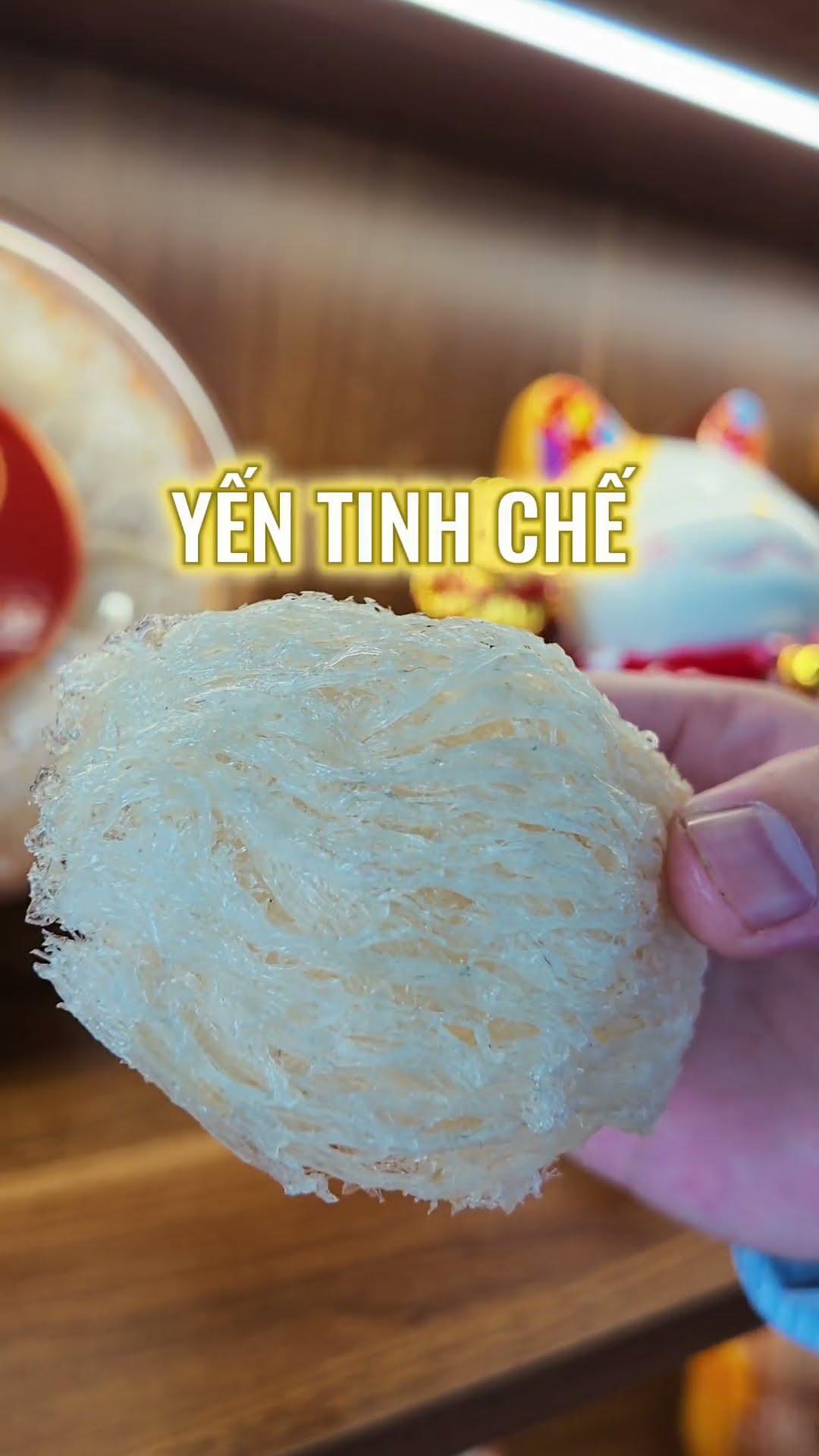
How do raw and refined bird's nest differ?
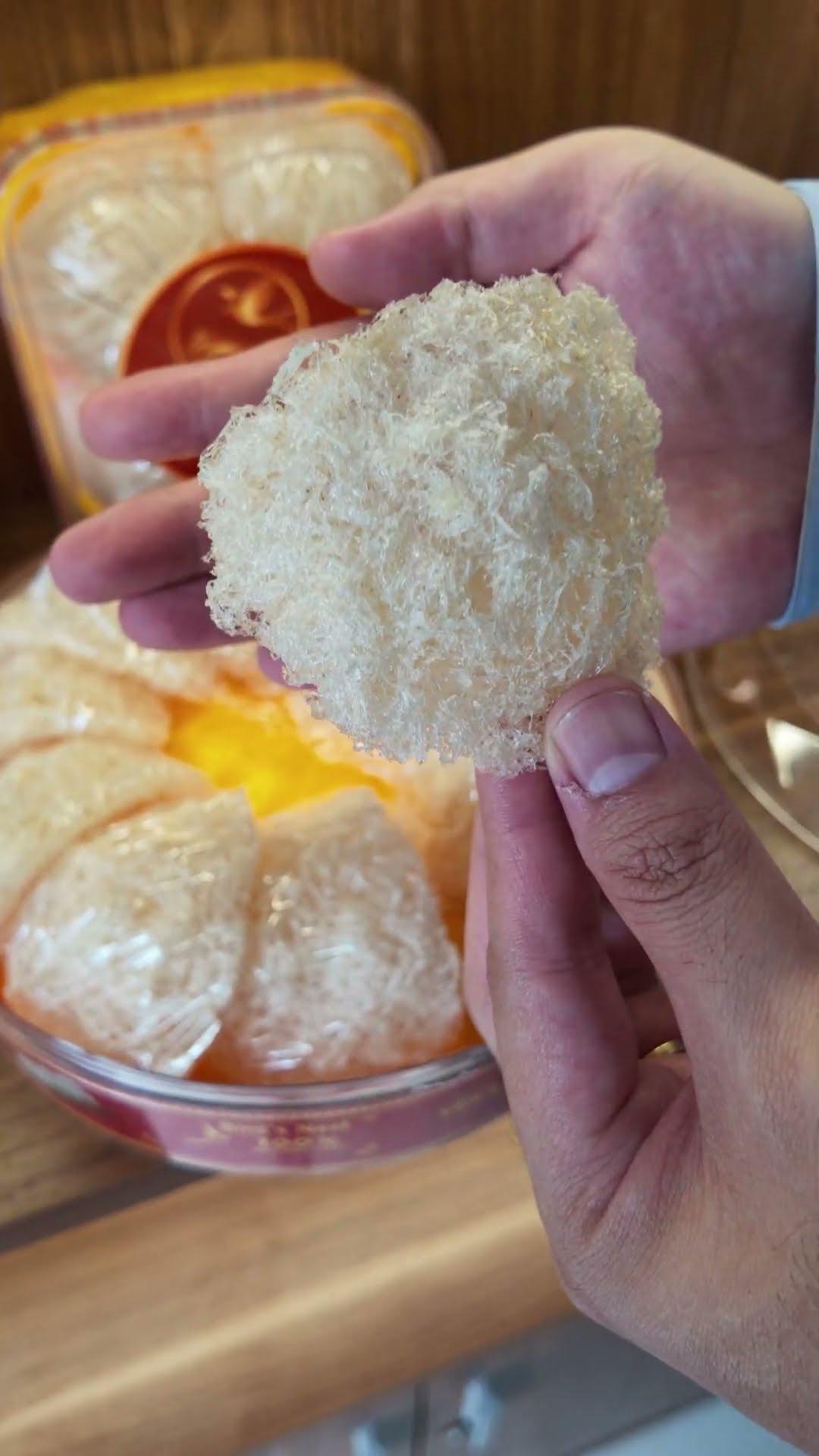
The truth few people know about nest crumbs
Related products
- Raw Bird's Nest – Pure, Low-Feather →Not refined, keeps its natural nest shape, you pick out the feathers yourself
- Dried Feather-Removed Bird's Nest – 95% Strands →About 95% of feathers removed, whole nest shape kept
- Refined Bird's Nest, Grade 1 – 70% Strands →Cleaned and reshaped, soak then double-boil
- Refined Bird's Nest, Grade 2 – 50% Strands →Cleaned and reshaped, moderate cost
- Refined Bird's Nest – Loofah-Style →Cleaned, loofah-style form for everyday use
- Clean Bird's Nest Feet →The base of the nest, cleaned, needs longer soaking
Frequently asked questions
How do raw and refined bird's nest differ?
Raw nest is the original nest, still with feathers and impurities, so you must soak it and pick out the feathers yourself. Refined nest has had its feathers fully cleaned and has been pressed back into a nest shape, so you only need to soak it until it swells before double-boiling.
What is feather-removed bird's nest?
Feather-removed nest is nest whose feathers have been picked out by hand while the nest keeps its shape. The dried feather-removed nest from Yến Sào Uyên Nguyên has about 95% of the feathers removed, and a 100g box holds 20 nest pieces; when soaking, check for and pick out any fine feathers left.
Which part of the nest are nest feet?
Nest feet are the base that fixes the nest to a rock wall or the wall of a swiftlet house. This part is thick and firm with few feathers but short strands, and it needs longer soaking than the body of the nest (at least 1 hour according to Long Chau pharmacy).
Which is cleaner, house-farmed or cave nest?
Studies have measured higher nitrite and nitrate in cave nest samples than in house-farmed samples, and cave nest is often darker. Actual cleanliness also depends on how each facility processes the nest, so ask the seller about origin and paperwork.
Is red bird's nest made from swiftlet blood?
No. Studies found no hemoglobin in red nest; the red colour is linked to nitrite, nitrate and iron from the cave or swiftlet-house environment. White nest can also be exposed to chemical vapour to turn it red, so ask carefully about origin.
Which types of bird's nest does Yến Sào Uyên Nguyên sell?
Raw nest, 95% dried feather-removed nest, refined Grade 1 (about 70% strands) and Grade 2 (about 50% strands), refined loofah-style, nest feet + loofah-style and clean nest feet. All are house-farmed nest from Khánh Hòa, Phan Thiết and Vũng Tàu, sold dry for you to double-boil yourself; each box has a moisture-absorbing sachet and a printed shelf life of 24 months.
About the author and publisher
Written by Đỗ Hoàng Quân, Director of Yến Sào Uyên Nguyên and legal representative of Uyên Nguyên Swallow Nest Company Limited (tax code 0319428456), from the sources listed at the end. For reference only; it does not replace a doctor's advice. The company's bird's nest preparation facility holds food safety certificate 6478/2026/SATTP-HCM.
Sources
- Long Chau pharmacy – What is raw bird's nest? Features, nutritional value and uses (22/10/2025; used for the definition of raw nest) (opens in a new tab) – viewed 8 November 2026
- Long Chau pharmacy – How to store dried bird's nest for a long time while keeping its quality (classification of dried nest) (opens in a new tab) – viewed 8 November 2026
- Long Chau pharmacy – Which is better, the bird's nest or the nest feet? (21/06/2023) (opens in a new tab) – viewed 8 November 2026
- Dien May Xanh – What is bird's nest? Types, prices and how to prepare it (08/04/2026) (opens in a new tab) – viewed 8 November 2026
- Tuoi Tre – Chaos in the bird's nest market, all kinds of fakes (19/04/2022) (opens in a new tab) – viewed 8 November 2026
- VietNamNet – The people who guard the swiftlet islands (29/12/2015, citing Khanh Hoa newspaper) (opens in a new tab) – viewed 8 November 2026
- FoodNavigator – China finds nitrite in edible bird's nests from Malaysia (25/08/2011) (opens in a new tab) – viewed 8 November 2026
- Centre for Food Safety Hong Kong – Nitrite in Bird's Nest (09/2011) (opens in a new tab) – viewed 8 November 2026
- But P. et al. (2013). Edible bird's nests – how do the red ones get red? Journal of Ethnopharmacology (opens in a new tab) – abstract read; original DOI link, viewed 8 November 2026
- Paydar M. et al. (2013). Prevalence of nitrite and nitrate contents and its effect on edible bird nest's color. Journal of Food Science (opens in a new tab) – abstract read; original DOI link, viewed 8 November 2026
- Quek M.C. et al. (2015). Preliminary nitrite, nitrate and colour analysis of Malaysian edible bird's nest. Information Processing in Agriculture (opens in a new tab) – abstract read; original DOI link, viewed 8 November 2026
- Kumpook S. et al. (2023). Influence of level and oxidation state of iron on colors of edible bird's nest. Radiation Physics and Chemistry (opens in a new tab) – abstract read; original DOI link, viewed 8 November 2026