
Buying guide
How to Tell Genuine from Fake Bird's Nest: Home Tests and Checking the Seller
By: Đỗ Hoàng Quân, Director of Yến Sào Uyên Nguyên · Published: · Updated:
Quick answer
You can spot fake nest at home by the colour of the strands, brittleness, how the nest swells in water, and smell, but no trick is 100% certain. Fillers such as gum karaya, red seaweed and snow fungus can usually be detected reliably only by laboratory tests. The safest approach is to buy from a seller with an address, labelling and paperwork.
This article helps you recognise goods when buying bird's nest. It is not medical advice. The home tests are screening only.
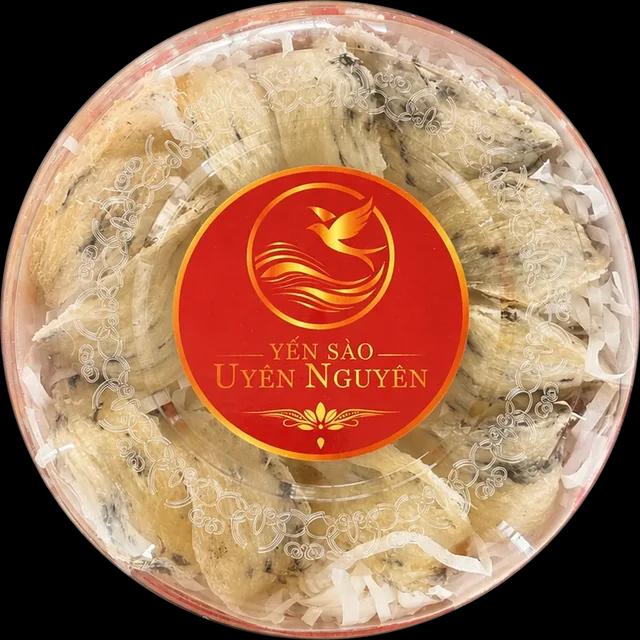
What signs help tell genuine from fake bird's nest?
The table below gathers 6 signs given by VnExpress (opens in a new tab) (answers by Dr. Truong Hong Son) and by Sai Gon Giai Phong (opens in a new tab) newspaper. Look at several signs together and do not conclude from just one.
| Sign | Genuine nest | Fake or adulterated nest | Source |
|---|---|---|---|
| Colour | Cloudy white, slightly yellowish; cloudy strands | Unnaturally bright white, looks translucent against light | VnExpress; SGGP |
| Brittleness when dry | Dry, brittle, breaks easily when squeezed | Soft, elastic, bends without breaking easily | VnExpress; SGGP |
| When soaked in water | Swells slowly, keeps its colour, strands stay clear | Swells up at once, crumbles when squeezed, dissolves or changes the colour of the water | VnExpress; SGGP |
| Smell | A slight characteristic fishy smell, not too sweet | Sweet from added sugar, a chemical smell, or no smell | VnExpress; SGGP |
| After double-boiling | Swells evenly, strands stay whole, soft and chewy | Swells little, crumbly, mushy | SGGP |
| Burn test | Burns normally | May give an odd burnt smell | SGGP |
These are screening signs. Genuine nest also varies in colour and swelling by type (raw, feather-removed, refined, nest feet) and by how it was processed. Raw nest still has feathers and needs to be cleaned before double-boiling.
What steps do you follow to test nest at home?
- Step 1: Look under natural light: genuine nest is cloudy white or slightly yellowish, and its strands are not perfectly even.
- Step 2: Gently break off a small corner while the nest is dry: genuine nest is brittle and snaps easily; adulterated nest is usually pliable and elastic.
- Step 3: Soak a small piece in a bowl of clean water: genuine nest swells slowly and keeps its colour and strands; adulterated nest usually swells up at once, crumbles, or makes the water cloudy or changes its colour.
- Step 4: Smell it after soaking: genuine nest has a slight fishy smell; a sharp sweet smell or a chemical smell is a sign to be careful.
- Step 5: Double-boil a small portion following the double-boiling guide: genuine nest swells evenly, with strands that stay whole and chewy.
About the burn test
The SGGP newspaper mentions burning the nest as a test, but Yến Sào Uyên Nguyên does not recommend it because it can cause burns and the result is not certain. The steps of looking, breaking, soaking and smelling above are safer.
What are fake or adulterated nests usually made from?
The study by Marcone (2005) (opens in a new tab) in the journal Food Research International recorded three fillers common in nest: gum karaya, red seaweed and snow fungus, making up about 2–10% of the weight of the finished product.
Vietnamese media (VnExpress (opens in a new tab), SGGP (opens in a new tab)) list more substances often mixed in: agar powder, starch, egg white, glass noodles, gelatin, gum karaya, salt and sugar.
How accurate is testing nest at home?
Not fully. Home tricks only help weed out obvious fakes. To detect fillers reliably, laboratories use analytical methods such as FTIR infrared spectroscopy (Guo et al., 2018 (opens in a new tab)), Raman spectroscopy (Shim et al., 2016 (opens in a new tab)) or nuclear magnetic resonance NMR (Xing et al., 2023 (opens in a new tab)).
Marcone (2005) also describes a test that uses nitric acid. This involves dangerous chemicals and you should not do it at home.
What should you watch for with yellow, orange or red nest?
A study of 58 nest samples in Borneo (Makara Journal of Science, 2022 (opens in a new tab)) recorded that darker-coloured samples (yellow, orange, red) had higher nitrite levels than white nest. When buying coloured nest, ask clearly about its origin and the test results for the batch.
How do you recognise fake canned or bottled bird's nest drink?
In July 2022, market management officers in Vĩnh Long seized 2,940 cans of bird's nest drink labelled "3% bird's nest"; test results concluded they were fakes in quality and claimed effects (Ministry of Industry and Trade (opens in a new tab)).
When buying nest drink or ready-double-boiled nest, look at: the manufacturer's name and address, production date, expiry date, ingredients and nest percentage, and the labels; be wary of unusually cheap prices and of sellers with no address (SGGP (opens in a new tab)).
Note: Yến Sào Uyên Nguyên does not sell ready-double-boiled nest; it sells only dried bird's nest for you to double-boil yourself.
Where should you buy nest to avoid fakes?
A checklist before buying, compiled from the suggestions of SGGP (opens in a new tab) newspaper:
- The seller has a store and a specific address where you can go and see the goods.
- For a company, the tax code and legal name can be looked up.
- The packaging has full labelling: name, facility address, production date, expiry date.
- The price is not unusually cheap compared with the going rate for the same type.
- You may open and check the goods on receipt, and there is a policy to exchange defective goods.
What can you check when buying nest at Yến Sào Uyên Nguyên?
- Uyên Nguyên Swallow Nest Company Limited, enterprise code 0319428456, can be looked up on the National Business Registration Portal (opens in a new tab).
- The nest processing facility at 53 Trần Nguyên Đán, Tân Định ward holds food safety certificate No. 6478/2026/SATTP-HCM issued by the Ho Chi Minh City Food Safety Department. See images of the documents on the Certificates page.
- The store is at 53 Trần Nguyên Đán, Tân Định Ward, Ho Chi Minh City, open 08:00 – 21:30 daily (see the map).
- You may open and check the product before paying (inspection policy) and get a free exchange if goods are wrong, missing or damaged on receipt (exchange policy).
- Product descriptions state the type of nest and the strand ratio, for example refined Grade 1 about 70% strands, Grade 2 about 50% strands.
Related videos

How to tell genuine from fake bird's nest: are home tricks enough?
Related products
Frequently asked questions
What is the quickest way to test genuine nest?
Soak a small piece in clean water: genuine nest swells slowly, keeps its colour, shows clear strands and has a slight fishy smell; adulterated nest usually swells up at once, crumbles or dissolves (according to VnExpress and SGGP newspaper). This is only a screening method, not 100% certain.
Is bright, pure white nest fake?
Not necessarily, but it is a sign to be careful. Genuine nest is usually cloudy white, slightly yellowish; an unnaturally bright white may come from bleaching or from mixing in fillers (according to SGGP newspaper).
Can burning nest tell you whether it is genuine?
SGGP newspaper says fake nest may give an odd burnt smell when burned, but this is not a reliable test and can cause burns. Rely on several signs together, such as colour, brittleness, how it swells in water and smell.
Is there any way to be 100% sure the nest is genuine?
Only laboratory analysis, such as FTIR infrared spectroscopy, Raman spectroscopy or NMR, can establish with certainty whether nest has been mixed with fillers.
What paperwork should I look at when buying nest?
Check that the label shows a name, facility address, production date and expiry date; look up the company's tax code; and ask for the food safety certificate. For canned or bottled nest drink, also check the ingredients and the nest percentage.
About the author and publisher
Written by Đỗ Hoàng Quân, Director of Yến Sào Uyên Nguyên and legal representative of Uyên Nguyên Swallow Nest Company Limited (tax code 0319428456), from the sources listed at the end. For reference only; it does not replace a doctor's advice. The company's bird's nest preparation facility holds food safety certificate 6478/2026/SATTP-HCM.
Sources
- VnExpress – Telling genuine from fake bird's nest (Dr. Truong Hong Son, 09/01/2023) (opens in a new tab) – viewed 7 November 2026
- Sai Gon Giai Phong newspaper – Tips for buying genuine bird's nest and telling fake nest apart (03/07/2025) (opens in a new tab) – viewed 7 November 2026
- Ministry of Industry and Trade – Nearly 3,000 cans of fake bird's nest drink found (28/07/2022) (opens in a new tab) – viewed 7 November 2026
- Marcone M. (2005). Characterization of the edible bird's nest the "Caviar of the East". Food Research International (opens in a new tab) – abstract read; original DOI link, viewed 8 November 2026
- Guo L. et al. (2018). Rapid authentication of edible bird's nest by FTIR spectroscopy combined with chemometrics. J Sci Food Agric (opens in a new tab) – abstract read; original DOI link, viewed 8 November 2026
- Shim E.K.S. et al. (2016). Characterization of swiftlet edible bird nest, a mucin glycoprotein, and its adulterants by Raman microspectroscopy. J Food Sci Technol (opens in a new tab) – abstract read; original DOI link, viewed 8 November 2026
- Xing M. et al. (2023, print 2024). Origin tracing and adulteration identification of bird's nest by high- and low-field NMR combined with pattern recognition. Food Research International (opens in a new tab) – abstract read; original DOI link, viewed 8 November 2026
- Ningrum S.G. et al. (2022). Evaluation of Nitrite Concentration in Edible Bird's Nest (White, Yellow, Orange, and Red Blood). Makara Journal of Science (opens in a new tab) – abstract read; original DOI link, viewed 8 November 2026